PTSD & Trauma Treatment in Greater Noida | Dr. Debolina Chowdhury | Nirvana Clinic

PTSD & Trauma Treatment in Greater Noida | Dr. Debolina Chowdhury | Nirvana Clinic
Trauma-Informed Psychiatry

PTSD & Trauma Treatment in Greater Noida

What happened to you was not your fault. But the nightmares, flashbacks, and constant fear don't have to be your future. Expert PTSD and trauma treatment in Greater Noida is available — healing is possible.

Understanding Trauma & PTSD

PTSD and Trauma Treatment in Greater Noida — Your Pain Is Valid

If you're looking for PTSD and trauma treatment in Greater Noida, you're taking a brave step. Trauma is not "just in your head" — it physically changes the brain's fear and memory circuits. When something terrifying happens, your brain creates a survival response. In PTSD, that response gets stuck on high alert — long after the danger has passed.

You might be reliving the event through flashbacks. Jumping at sudden sounds. Unable to sleep without nightmares. Avoiding places, people, or conversations that remind you of what happened. Feeling emotionally numb — disconnected from people you love. These are not signs of weakness. They are your brain's attempt to protect you from a threat it hasn't finished processing.

PTSD and trauma treatment in Greater Noida at Nirvana Clinic helps your brain complete that processing — so the memory loses its power over you, and you can live in the present again.

Dr. Debolina Chowdhury provides compassionate, trauma-informed psychiatric care. She understands that talking about trauma is hard — and she will never push you faster than you're ready. Healing happens at YOUR pace, in a space that feels completely safe.

Types of Trauma We Treat

Trauma Takes Many Forms — All Are Valid

PTSD and trauma treatment in Greater Noida at Nirvana Clinic covers the full spectrum of traumatic experiences.

🚗
Accidents & Physical Trauma
Road accidents, workplace injuries, near-death experiences, or witnessing a traumatic event. Fear of driving, travelling, or similar situations afterwards.
💔
Domestic Violence & Abuse
Physical, emotional, or sexual abuse by a partner or family member. Controlling behaviour, threats, and psychological manipulation. Confidential support available.
🧒
Childhood Trauma & Neglect
Physical or emotional abuse in childhood, parental neglect, witnessing domestic violence, bullying, or growing up in a chaotic or unsafe home. Effects often surface in adulthood.
Grief & Sudden Loss
Unexpected death of a loved one, traumatic bereavement, suicide of a family member or friend. Complicated grief that doesn't resolve with time alone.
🏥
Medical Trauma
Traumatic diagnosis (cancer, HIV), ICU experiences, difficult childbirth, medical procedures causing PTSD, or COVID-related trauma and grief.
🔒
Sexual Assault & Harassment
Any form of sexual violence or harassment — recent or years ago. Treated with the utmost sensitivity, confidentiality, and at the survivor's pace. No pressure, no judgment.
👨‍👩‍👧
Relationship Trauma
Betrayal, infidelity, toxic relationships, emotional manipulation, or narcissistic abuse. Trust destruction that affects all future relationships.
💼
Workplace Trauma
Bullying, harassment, wrongful termination, public humiliation, or witnessing workplace violence. Professional identity destruction and loss of confidence.
🧠
Complex / Cumulative Trauma
Multiple traumatic experiences over years — often starting in childhood. Creates deep patterns of anxiety, distrust, emotional dysregulation, and relationship difficulty. Requires specialised long-term treatment.
PTSD Symptoms

The 4 Clusters of PTSD Symptoms

PTSD is diagnosed when symptoms from ALL four clusters are present for more than one month and significantly affect daily life.

Cluster 1
🔄 Re-experiencing
  • Vivid flashbacks — feeling like the event is happening again
  • Recurring nightmares about the trauma
  • Intrusive, unwanted memories that come without warning
  • Intense distress when reminded of the event
  • Physical reactions to reminders — racing heart, sweating, trembling
Cluster 2
🚫 Avoidance
  • Avoiding places, people, or situations that remind you of the trauma
  • Refusing to talk about what happened
  • Keeping extremely busy to avoid thinking about it
  • Emotional numbing — feeling detached or "empty"
  • Losing interest in activities you once enjoyed
Cluster 3
💭 Negative Changes in Thoughts & Mood
  • Persistent feelings of guilt, shame, or blame ("it was my fault")
  • Negative beliefs about yourself or the world ("no one can be trusted")
  • Feeling permanently damaged or broken
  • Inability to feel positive emotions — joy, love, excitement
  • Feeling disconnected from family and friends
Cluster 4
⚡ Hyperarousal
  • Constantly on edge — scanning for danger (hypervigilance)
  • Exaggerated startle response — jumping at small sounds
  • Difficulty sleeping — insomnia or restless sleep
  • Irritability, anger outbursts, or aggressive behaviour
  • Difficulty concentrating — brain fog, forgetfulness
What Trauma Does to Your Brain
Understanding the neuroscience helps remove shame. PTSD is a brain injury — not a character flaw.
🔴
Amygdala (fear center) goes into overdrive. Your brain's alarm system stays permanently activated — detecting danger even when you're safe. This causes hypervigilance, startle responses, and constant anxiety.
🔵
Prefrontal cortex (rational brain) shuts down. The part that says "you're safe now, calm down" goes offline during flashbacks. This is why you can't just "think your way out" of PTSD.
🟡
Hippocampus (memory filing) malfunctions. The traumatic memory doesn't get properly "filed away" as a past event. It stays raw, vivid, and feels present — which is why flashbacks feel so real.
🟢
Treatment rewires these circuits. Trauma-focused therapy literally helps the brain reprocess and "file" the memory correctly. The event becomes a past memory rather than a present threat. This is backed by brain imaging research.
Our Treatment Approach

How We Treat PTSD & Trauma at Nirvana Clinic

Dr. Debolina uses a phased, trauma-informed approach — stabilise first, process second, grow third.

01
Safety & Stabilisation
First priority: making you feel safe — both in sessions and in daily life. Teaching grounding techniques, breathing exercises, and coping tools to manage flashbacks and anxiety before we begin processing the trauma itself.
02
Comprehensive Assessment
Thorough psychiatric evaluation — trauma history, current symptoms, coping mechanisms, substance use, physical health, and support system. Understanding the full picture so treatment is precisely targeted.
03
Trauma-Focused CBT
The gold-standard psychotherapy for PTSD. Gradually and safely processing traumatic memories, challenging guilt and shame-based thoughts, and reducing avoidance behaviours — all at a pace you control.
04
Medication Support
When PTSD causes severe anxiety, insomnia, nightmares, or depression, targeted medication provides relief while therapy addresses the root cause. SSRIs for mood, Prazosin for nightmares, short-term anxiolytics for acute distress.
05
Emotional Regulation Training
Learning to manage emotional floods without shutting down or exploding. Identifying triggers, creating safety plans, and building a toolbox of healthy responses for when trauma memories surface unexpectedly.
06
Post-Traumatic Growth
The final phase — not just returning to baseline, but growing beyond it. Many trauma survivors develop deeper empathy, clearer priorities, stronger relationships, and a renewed sense of purpose after successful treatment.
Your Trauma Specialist

Dr. Debolina Chowdhury — Healing at Your Pace
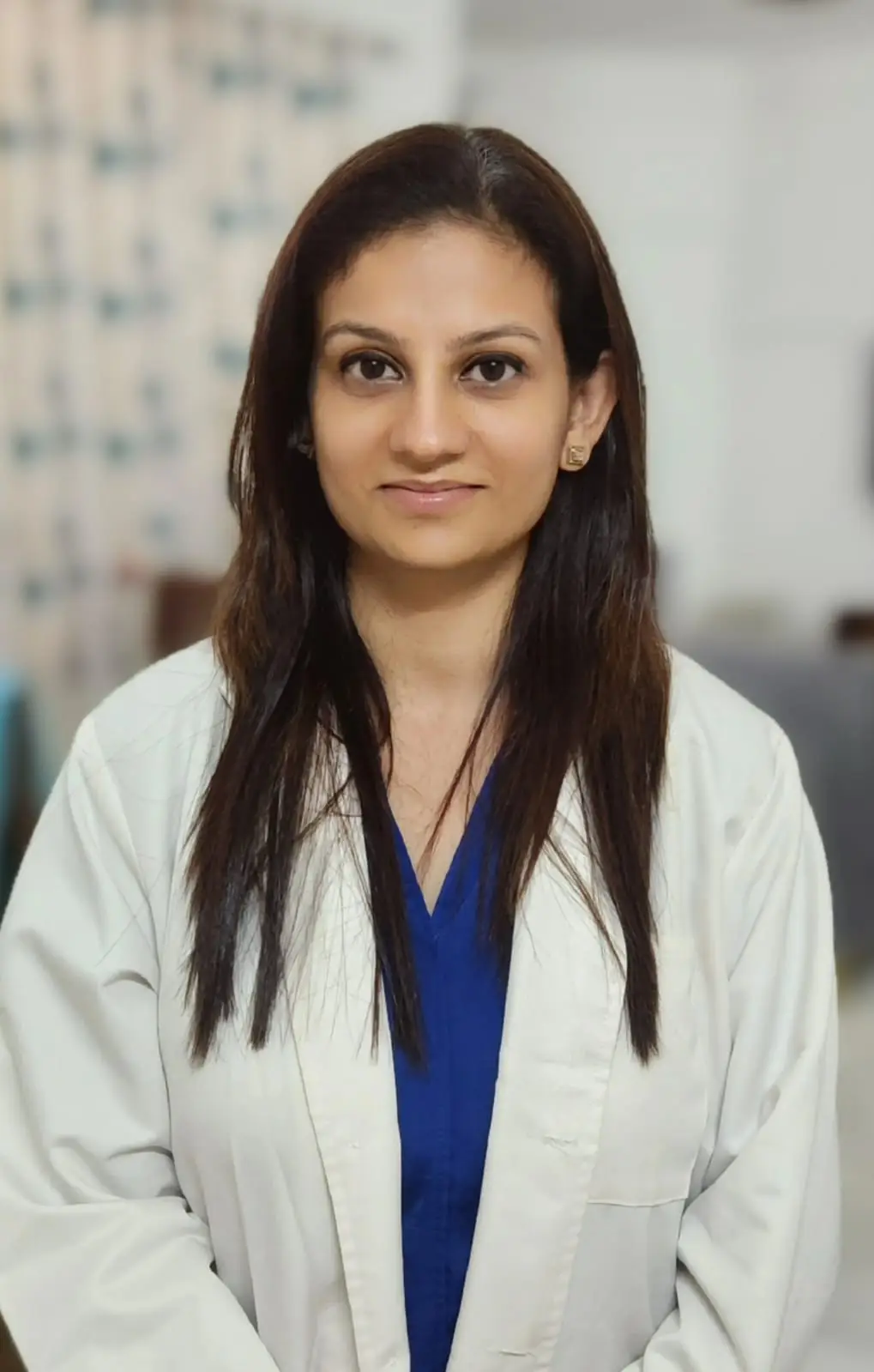
Dr. Debolina Chowdhury — PTSD and Trauma Specialist Greater Noida
Dr. Debolina Chowdhury
MD Psychiatry · Senior Consultant · Nirvana Clinic & Fortis Hospital, Greater Noida

15+ years of clinical experience including trauma-informed psychiatric care for survivors of abuse, accidents, grief, and complex trauma. Dr. Debolina is known for her extraordinary patience and gentleness with trauma patients. She never rushes, never pushes, and always lets you control the pace. Many patients say she was the first person they felt truly safe talking to. Published researcher in psychiatry with expertise spanning PTSD, depression, anxiety, and women's mental health.

"I carried the weight of childhood abuse for 20 years. I never told anyone. Dr. Debolina was the first person I opened up to — because she never pushed. She just created a space where I felt safe enough to finally speak. After a year of therapy, I don't have nightmares anymore. I can actually hug my children without flinching. She gave me my life back."

— Female, 38, Greater Noida · Verified Patient

"After a serious road accident, I couldn't drive, couldn't sleep, and had panic attacks every time I heard a loud sound. My wife brought me to Dr. Debolina. She explained what was happening in my brain — why I wasn't 'just being weak.' Within 4 months of treatment, I was driving again. The flashbacks stopped. I wish I'd come sooner."

— Male, 42, Greater Noida · Verified Patient
Common Questions

Frequently Asked Questions

What is PTSD and how do I know if I have it?
PTSD develops after experiencing or witnessing a traumatic event. Symptoms include flashbacks, nightmares, severe anxiety, emotional numbness, avoidance of reminders, and hypervigilance. If these persist for more than a month and interfere with daily life, you may have PTSD. Dr. Debolina provides thorough PTSD assessment at Nirvana Clinic.
Who provides PTSD and trauma treatment in Greater Noida?
Dr. Debolina Chowdhury (MD Psychiatry, 15+ years) at Nirvana Clinic, Sun Twilight Mall, Greater Noida provides expert PTSD and trauma treatment in Greater Noida using trauma-focused CBT, medication management, and compassionate long-term therapy.
Can old childhood trauma still affect me as an adult?
Absolutely. Unresolved childhood trauma can manifest in adulthood as anxiety, depression, anger, relationship difficulties, trust issues, and even physical health problems. It is never too late to seek help and begin healing.
Does trauma treatment require medication?
Not always. Many patients improve with therapy alone. When PTSD causes severe anxiety, insomnia, flashbacks, or depression, medication provides symptom relief while therapy addresses the root cause. Dr. Debolina individualises every treatment plan.
How long does PTSD treatment take?
Single-event trauma may improve within 8-16 sessions. Complex or childhood trauma often requires 6-12 months of structured therapy. Dr. Debolina sets realistic expectations and tracks progress at every session.
Will I have to relive the trauma in detail during sessions?
Not until you're ready, and never in a way that retraumatises you. Dr. Debolina uses a phased approach — stabilisation and coping tools first, trauma processing only when you feel safe and prepared. You always control the pace.
How to book PTSD and trauma treatment in Greater Noida?
Call or WhatsApp Dr. Debolina Chowdhury at +91 8826447767. Nirvana Clinic is at Shop GF-93, Sun Twilight Mall, Opp. Delta 1 Metro Station, Greater Noida, UP 201308. Open Monday to Saturday, 9 AM to 8 PM. Online consultations also available.

What Happened to You
Doesn't Define Your Future.

Trauma stole your sense of safety. Treatment can give it back. You deserve to live without fear, nightmares, and emotional numbness.

📍 Shop GF-93, Sun Twilight Mall, Opp. Delta 1 Metro Station, Greater Noida, UP 201308
🕘 Mon–Sat: 9:00 AM – 8:00 PM · Online consultations available