Exam Stress Treatment in Greater Noida: A Student Mental Health Guide
A psychiatrist's evidence-based guide for students in Greater Noida — managing exam stress, academic burnout, and concentration issues. When self-help is enough, and when to see a specialist.
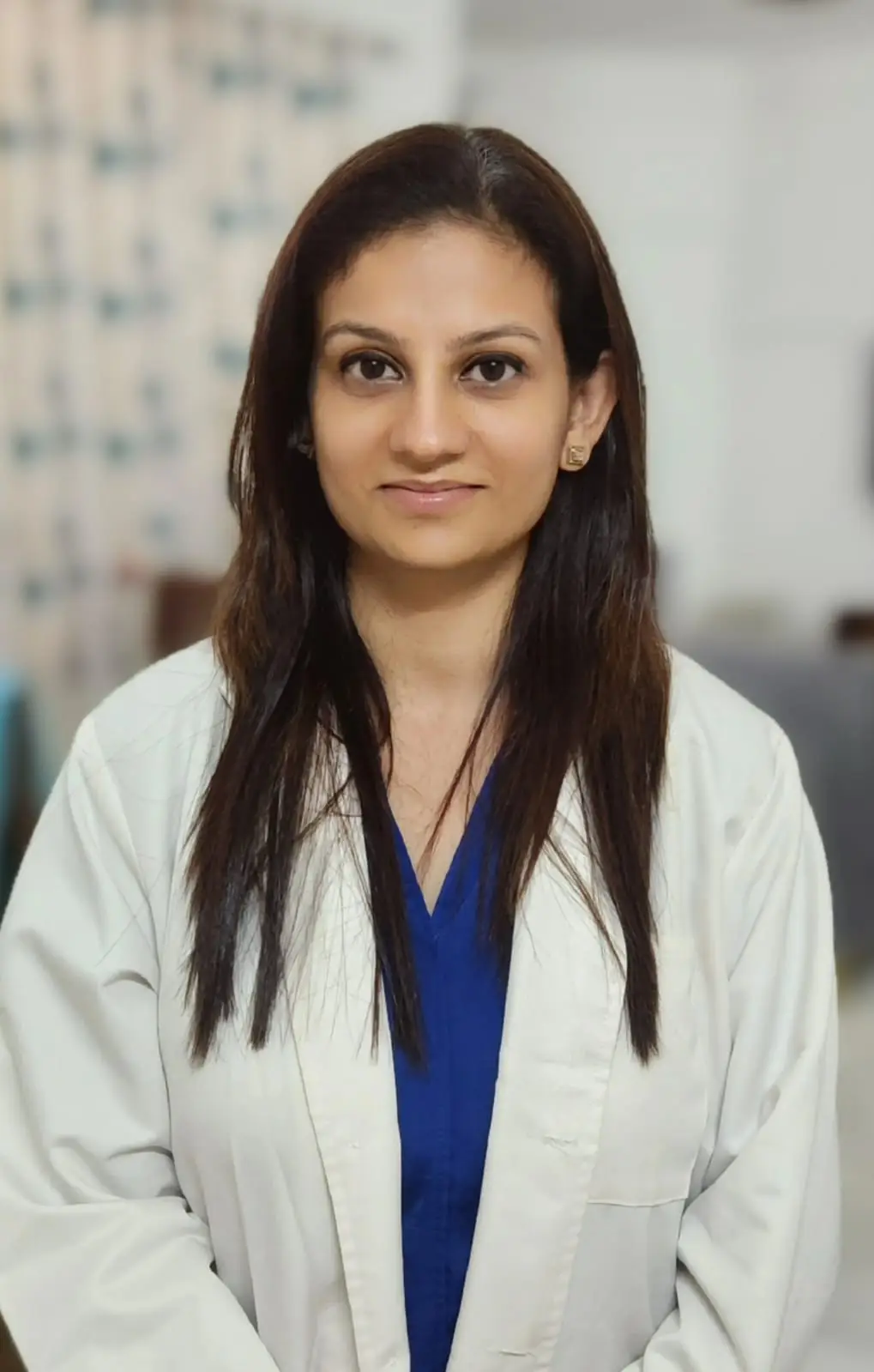
Exam stress treatment in Greater Noida has become a real clinical need. With seven major universities in Knowledge Park alone — Sharda, Galgotias, Bennett, Amity, IIMT, Lloyd, GL Bajaj — and the JEE/NEET ecosystem of Greater Noida coaching centres, I see students every week who are not just "stressed" but genuinely struggling. The hostel life, the parental pressure, the comparison with classmates, and competitive placement seasons combine into something that often crosses the line from normal stress into clinical anxiety.
This guide explains the difference between healthy stress and burnout, what evidence-based self-help actually works, and — most importantly — when self-help is not enough and you need to see a psychiatrist. As a senior consultant psychiatrist at Fortis Hospital and Nirvana Clinic in Greater Noida, this is the framework I use with student patients every day.
This article is written by Dr. Debolina Chowdhury (MD Psychiatry), Senior Consultant Psychiatrist at Fortis Hospital and Nirvana Clinic, Greater Noida. 15+ years of clinical experience, 17 peer-reviewed publications including chapters in the Oxford Textbook and IPS Textbook. Specialist training in adolescent and student mental health.
Healthy Stress vs Academic Burnout — Know the Difference
Not all stress is bad. A moderate level of stress — what psychologists call "eustress" — actually improves focus and performance during exams. The problem is when normal stress crosses into burnout. Here is the clinical distinction I use:
Healthy stress looks like: feeling alert before exams, butterflies the morning of, motivation to revise, brief sleep disruption the night before. It resolves after the exam.
Academic burnout looks like: persistent inability to start studying despite trying, "blanking out" during exams you knew the material for, sleep that doesn't recover after rest, loss of interest in everything (not just studies), and physical symptoms like headaches, palpitations, or stomach upset that don't have a medical cause. This pattern lasts weeks, not days.
If what you are experiencing matches the second list — that is not weakness, it is not a phase, and it will not "fix itself" by you trying harder. That is the moment exam stress treatment becomes appropriate.
Evidence-Based Coping Strategies Students Can Try First
For mild-to-moderate exam stress, these strategies have strong research backing. Try them consistently for 2–3 weeks before deciding self-help is not enough.
- Active Retrieval Practice (Not Re-reading)Re-reading notes feels productive but creates an "illusion of fluency". Active recall — closing the book and explaining the concept out loud or writing it from memory — is the single most-validated study technique in cognitive science. It also reduces panic during actual exam hours, because the retrieval pathway is already trained.
- The 7–9 Hour Sleep StandardDuring deep sleep, the brain's glymphatic system clears metabolic waste and consolidates memories. Pulling all-nighters before exams reduces performance more than studying less and sleeping. For students in Greater Noida hostels — keep wake times consistent, limit screens after 11 PM, and use blackout curtains if your roommate's schedule is different.
- 4-7-8 Breathing for Acute AnxietyInhale for 4 seconds, hold for 7, exhale for 8. Repeat 4 cycles. This activates the parasympathetic nervous system, drops heart rate within 60 seconds, and clears the "mental fog" of acute panic. Useful before walking into an exam hall or when you feel a panic spike during studying.
- The 50/10 Study Rule (Pomodoro Variant)50 minutes of focused study, then a 10-minute physical break — walk, stretch, hydrate (no phone). After 4 cycles, take a 30-minute break. Sustained attention has limits; pretending otherwise causes diminishing returns and burnout. Most JEE/NEET students dramatically over-study and under-recover.
- Limit Screen Time in the EveningBlue light suppresses melatonin and pushes sleep onset later. For students who study on laptops, the effect is doubled by the dopamine reward loop of social media checks. Hard rule: no Instagram/Reels for 90 minutes before bedtime. Replace with reading, light music, or a short walk.
- Regular Cardio (Not Just Gym)30 minutes of brisk walking or jogging 4–5 times per week reduces anxiety scores comparably to some SSRIs in mild-to-moderate cases — confirmed by multiple meta-analyses. The Greater Noida sectors have walkable internal roads. Even 20 minutes daily is meaningful.
When Self-Help Is Not Enough — Red Flags
If you have been doing the strategies above for 2–3 weeks and are still struggling, or if any of the following are present, it is time to see a psychiatrist for proper exam stress treatment in Greater Noida:
Please reach out today — not tomorrow. Call iCall: 9152987821 (Mon–Sat, 8 AM–10 PM) or Vandrevala Foundation: 1860-2662-345 (24×7, free, confidential). Or call Dr. Debolina at +91 88264 47767 for an urgent appointment. You are not weak. Reaching out is the strongest thing you can do.
Dr. Debolina Chowdhury runs hybrid student mental health consultations at Nirvana Clinic — initial in-person assessment, then online follow-ups that fit around your study/exam schedule. Confidential, age-appropriate, evidence-based.
Child & Adolescent Psychiatry at Nirvana Clinic →What Exam Stress Treatment Actually Looks Like
Many students avoid coming to a psychiatrist because they assume it means medication. It usually doesn't. Here is what the first consultation looks like at Nirvana Clinic:
- Detailed assessment (45–60 min) — academic context, sleep, family situation, hostel life, history of anxiety or low mood. No rushed appointments.
- Honest categorisation — is this normal stress that needs better coping, situational anxiety, generalised anxiety disorder, depression, or something else? Treatment depends on which.
- Therapy first, almost always — Cognitive Behavioural Therapy (CBT) for exam anxiety has very strong evidence and works for the majority of student cases without medication.
- Medication only when clinically necessary — for moderate-to-severe anxiety, panic disorder, or depression that significantly impairs functioning. Always at minimum effective dose, with regular review.
- Hybrid follow-up — initial visits in person, follow-ups online so the student can attend from hostel or home during exam season.
- Confidentiality — for students 18+, sessions are fully confidential. For 14–17, we discuss confidentiality boundaries openly with both teen and parent.
Special Cases: JEE/NEET Aspirants and Hostel Students
Two patient groups I see most often in Greater Noida:
JEE/NEET aspirants from Greater Noida and Knowledge Park coaching centres: extreme study hours, parental investment pressure, peer comparison, identity tied entirely to a single exam result. Common presentations are panic attacks 4–6 weeks before the exam, "blanking out" during mocks, and post-result depressive episodes regardless of outcome (success and failure both can trigger this — different mechanisms). These are very treatable but need specialist input, not generic counselling.
Hostel students at Sharda, Galgotias, Bennett, Amity, GL Bajaj and other Greater Noida universities: a different pattern — homesickness in first semester, social anxiety, hostel-life adjustment, eating irregularity, and substance use (alcohol, vape, sometimes harder drugs) used as coping. The treatment path here usually starts with structured therapy plus practical environmental changes before any medication is considered.
Frequently Asked Questions About Exam Stress Treatment
QWhen should a student see a psychiatrist in Greater Noida?▼
If you have persistent panic attacks, are unable to focus despite trying, "blank out" during exams you prepared for, have insomnia for more than a week, or have feelings of hopelessness lasting two weeks or more — see a psychiatrist. Self-help is the right starting point, but if symptoms persist after 2–3 weeks of consistent self-help, professional input is appropriate.
QWill the psychiatrist immediately prescribe medication?▼
No. For most student cases, the first-line treatment is Cognitive Behavioural Therapy (CBT) and structured behavioural strategies. Medication is reserved for moderate-to-severe anxiety, panic disorder, or depression that significantly impairs functioning. When it is needed, it is at the minimum effective dose with regular review.
QAre sessions confidential? Will my parents be informed?▼
For students 18+, sessions are fully confidential. Nothing is shared with parents without your permission. For students 14–17, we discuss boundaries openly with both teen and parent at the start, and balance the teen's right to privacy with appropriate parental involvement.
QCan I have online consultations during exam season?▼
Yes. The standard at Nirvana Clinic is hybrid — first in-person assessment so the psychiatrist can do a proper evaluation, then online follow-ups that fit around your study/exam schedule. This works especially well for hostel students and JEE/NEET aspirants who cannot easily travel during exam preparation.
QHow much does exam stress treatment cost in Greater Noida?▼
Dr. Debolina Chowdhury's first consultation fee is in line with senior consultant psychiatrist rates in Delhi NCR. The first session is 45–60 minutes including detailed history-taking and a written treatment plan. Follow-up sessions are shorter and lower-cost. Call +91 88264 47767 for current fees and availability.
QWhat if I cannot afford ongoing therapy?▼
A single thorough consultation often gives students enough clarity and a structured self-help plan to manage independently — even if ongoing therapy isn't possible. Many universities also have free counselling cells; ask Dr. Debolina at the first visit and she can advise on local low-cost options. Don't avoid asking for help because of cost — there are pathways.
QHow do I book a consultation with Dr. Debolina?▼
Call or WhatsApp +91 88264 47767. Clinic: Shop GF-93, Sun Twilight Mall, opposite Delta 1 Metro Station, Greater Noida 201308. Open Monday to Saturday, 11 AM to 8 PM. The Aqua Line metro stops directly outside the clinic, so it's accessible from Knowledge Park, Pari Chowk, Noida Extension, and Gaur City.
Dr. Debolina Chowdhury is a Senior Consultant Psychiatrist at Fortis Hospital and Nirvana Clinic, Greater Noida. With 15+ years of clinical experience and specialist training in adolescent and student mental health, she sees students from across Greater Noida — Knowledge Park universities, Greater Noida West, Pari Chowk, Noida Extension and Gaur City — for exam stress, academic burnout, panic disorder, and adolescent depression. She has published 17 peer-reviewed papers and 5 book chapters including the Oxford Textbook of Organisational Psychological Medicine.
View Full Profile →Related Reading on Student Mental Health
Speak with a Student Mental Health Specialist
Dr. Debolina Chowdhury (MD Psychiatry, Senior Consultant Fortis) at Nirvana Clinic, Greater Noida. Confidential, age-appropriate, evidence-based exam stress treatment. Hybrid in-person + online consultations available.