
GLP-1 Muscle Loss in India: Are You Losing Fat or Muscle on Ozempic and Mounjaro?
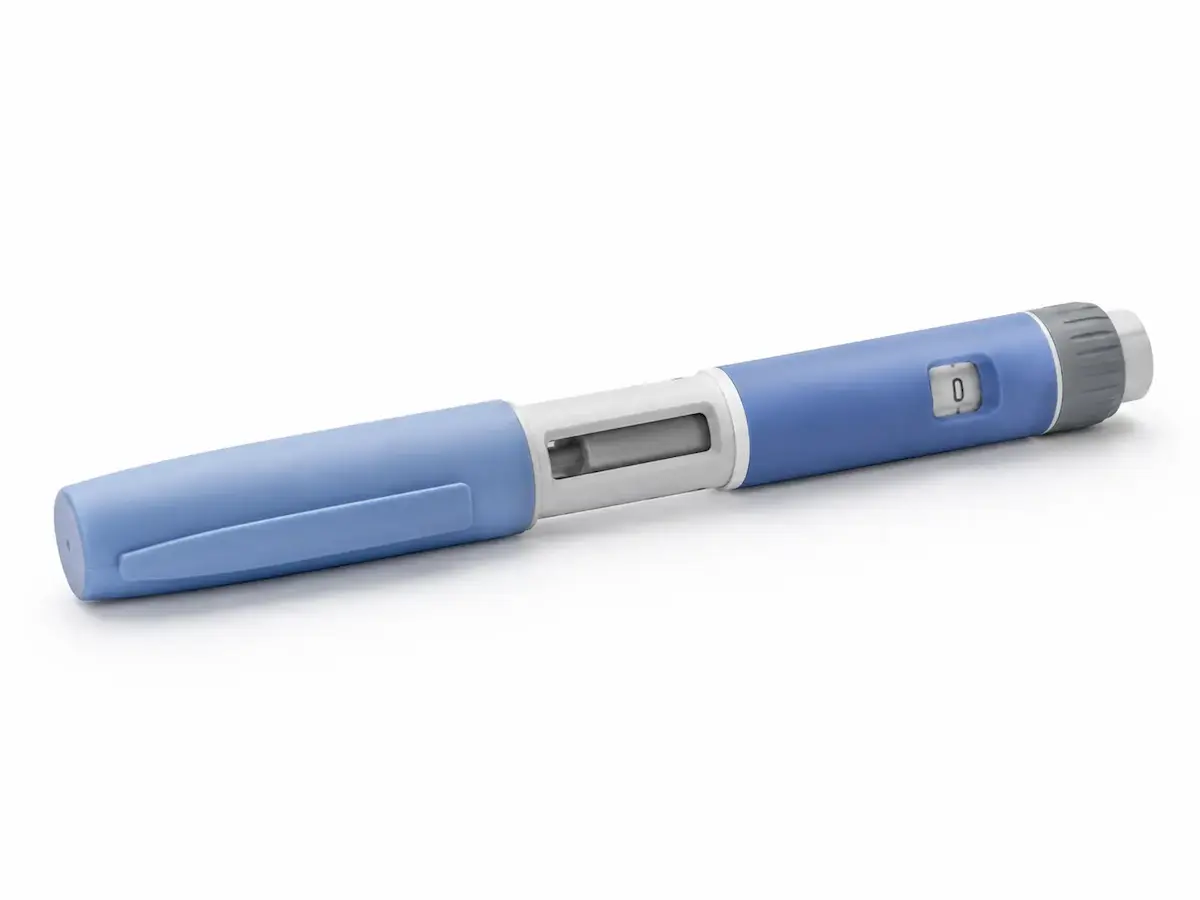
Doctor, my weight has dropped 14 kilos in five months on Mounjaro. Everyone says I look great. But I can't open a jar anymore, and last week I tripped on my carpet for no reason. Am I losing muscle?
She was right to worry.
This is a real conversation I had at my Greater Noida clinic two weeks ago. The patient — a 47-year-old IT executive — had achieved exactly the kind of weight loss that gets posted on Instagram. The number on the scale was a triumph. But her body composition was telling a different, less flattering story.
Over the last eighteen months, I've watched the GLP-1 boom unfold in India in real time. Ozempic, Mounjaro, Wegovy, Rybelsus, the generics — patients are losing weight at a pace and scale that was unimaginable five years ago. The mood in clinic has shifted from "this drug is too expensive" to "everyone in my building is on it." That's a remarkable change in twenty-four months.
But as a diabetologist who reads the international literature, I'm now seeing a second wave of concerns from patients and their doctors — concerns that the first wave of GLP-1 enthusiasm largely ignored. The most important of these is muscle loss, also called sarcopenia.
This article is for every Indian patient currently on or considering Ozempic, Mounjaro, Wegovy or any generic semaglutide for weight loss or diabetes. The goal is not to scare you off these drugs — they are some of the most important advances in metabolic medicine in a generation. The goal is to help you lose fat without losing the muscle, strength, and function that make life liveable.
The 75/25 rule — and why it matters
Let me start with the clearest, most useful number to come out of GLP-1 research so far.
In the SURMOUNT-1 trial — the landmark study of tirzepatide (Mounjaro) — patients lost an average of 21.3% of their body weight over 72 weeks. When researchers measured what kind of weight came off using DXA scans, the answer was strikingly consistent: approximately 75% of the weight loss was fat. Approximately 25% was lean mass — and lean mass includes muscle, bone, water, and organs.
📊 The Key Number
SURMOUNT-1 DXA substudy (160 adults, 72 weeks): mean body weight change −21.3%, fat mass −33.9%, lean mass −10.9%. Of total weight lost: ~75% fat, ~25% lean.
Look M et al., Diabetes Obes Metab, 2025. PMID 39996356.
That 25% sounds bad on first reading. It isn't, necessarily. Even old-fashioned dieting or surgical weight loss produces roughly the same proportion. When you lose body weight by any means, a quarter of it tends to come from non-fat tissue. This is biology, not GLP-1 misbehaving.
But there's a critical nuance the headlines miss: lean mass loss is not the same as muscle loss. Lean mass includes muscle plus bone, organs, and intracellular water. When researchers look specifically at appendicular skeletal muscle — the muscle in your arms and legs that actually does work — the picture in clinical trials is usually reassuring. Multiple analyses suggest that the proportion of body weight that is muscle actually increases slightly after GLP-1 treatment, because fat falls faster than muscle.
So why am I writing this article?
Because clinical trials are not real life. And Indian bodies are not the average body studied in SURMOUNT-1.
Why Indian patients are at higher risk than the trial average
SURMOUNT-1 was conducted predominantly in well-nourished Western adults, most under age 50, most with adequate baseline muscle mass. The Indian patient I see at my Greater Noida clinic is often a very different starting body.
Three reasons Indian bodies face higher GLP-1 muscle-loss risk:
1. The "thin-fat" Indian phenotype
Indians develop metabolic disease at a lower BMI than Westerners. We tend to have more visceral fat and less skeletal muscle at the same body weight as a European of the same height. This means many Indian patients start GLP-1 therapy already running a muscle deficit. Lose 25% of an already-low muscle mass, and you cross into clinical sarcopenia faster than a Western patient with the same percentage weight loss.
2. The Indian high-carb, low-protein diet
The typical Indian plate is roti, rice, dal, sabzi, curd. By weight, this is heavy in carbohydrates and light in protein. The average urban Indian gets roughly 0.6–0.8 grams of protein per kilogram of body weight per day. To preserve muscle during rapid weight loss, the evidence-based target is at least 1.2–1.6 grams per kg per day. Most Indian GLP-1 patients are eating roughly half of what they need to protect their muscle.
3. Sedentary urban lifestyles
Resistance training is the single best protector of muscle during weight loss. The percentage of urban Indian adults who lift weights regularly is — to put it generously — not high. Most weight-loss plans I see patients arrive with involve walking, yoga, or occasional cardio. These are wonderful for cardiovascular health and mood, but they do almost nothing to protect muscle during rapid fat loss.
Combine these three factors and you have the recipe for what I'm now seeing clinically: patients who lose 15–20 kilos on Mounjaro or Wegovy and look great in clothes — but who quietly become weaker, more fatigued, and more fall-prone than they were when they were heavier.
This is not theoretical. A recent real-world study (Greater LBM Decline with Tirzepatide than Semaglutide, medRxiv 2026) found that more than 34% of patients on either semaglutide or tirzepatide lost over 5% of lean body mass — substantially above what trial protocols suggested. The same study identified a "Depletive GLP-1 metabotype" — patients who lose more than 20% body weight AND more than 5% lean mass — in roughly 7% of treated patients. That is one in fifteen patients heading toward serious muscle compromise.
What sarcopenia actually feels like (and why you'd miss it)
Sarcopenia is the clinical term for low skeletal muscle mass combined with low muscle strength or function. It doesn't announce itself like a heart attack or a fever. It creeps in quietly, often disguised as ageing or "being out of shape." That's why so many patients lose meaningful muscle on GLP-1 therapy without realising.
Here is what to watch for:
🔍 6 warning signs of muscle loss on GLP-1 medication
If you notice any two of these within 3 months of starting Ozempic, Mounjaro, Wegovy or a generic, this article is meant for you:
- Reduced grip strength — difficulty opening jars, twisting taps, or holding bags you used to manage easily
- Trouble climbing stairs — needing the railing, feeling breathless or leg-tired on the same staircase you used without thought before
- Worse balance — tripping more often, feeling wobbly when changing direction, swaying when standing on one leg to put on socks
- Sudden fatigue with daily activity — carrying groceries to the car, walking up the metro stairs, holding a child for ten minutes feels harder
- Visible loss of arm and shoulder definition — clothes hang looser around the upper body, not just the waist; old shirts look baggy in the shoulders
- Slower bodily recovery — minor walks leave you tired the next day; you feel weaker week-to-week despite the weight number looking better
A small but useful clinical test you can do at home: the chair stand test. Sit in a regular dining chair with arms crossed over your chest. Stand up and sit back down five times as quickly as you can. If it takes longer than 12 seconds for an adult under 60, or longer than 14 seconds if over 60, your lower-body muscle function is below average. Many of my patients on GLP-1 therapy fail this test six months in. Most of them passed it before they started.
The 4-pillar protocol I use with every GLP-1 patient
This is the protocol I now go through with every patient before they receive their first prescription for Ozempic, Mounjaro, Wegovy, Rybelsus, Poviztra, or any generic semaglutide at Nirvana Clinic's medical weight loss programme. It is also what I send to existing patients who didn't get this information when they started elsewhere.
Pillar 1 — Protein target
Goal: 1.2 to 1.6 grams of protein per kilogram of body weight per day. For a 75 kg patient, that's 90 to 120 grams of protein daily — roughly double what the average urban Indian consumes.
Practically: a palm-sized portion of protein at every meal, plus one substantial snack with protein. Eggs, paneer, curd, chicken, fish, dal supplemented with paneer or whey, soybean, tofu. For purely vegetarian patients, this requires planning — a single bowl of dal will not get you there. I often recommend a measured scoop of whey protein once a day, especially after exercise, for patients who struggle to hit the target with food alone.
Critically: GLP-1 medications suppress appetite. Many patients eat far less without realising. Without explicit protein targeting, the protein cut can be 40–50% — which directly drives muscle loss.
Pillar 2 — Resistance training, 2 to 3 sessions per week
This is the single most important intervention, and the one most patients skip.
Resistance training means lifting something heavy enough that it's hard. Bodyweight exercises (push-ups, squats, lunges), resistance bands, free weights, or gym machines all work. The form matters less than the consistency and the load. Two to three sessions per week, 30–40 minutes per session, working all major muscle groups.
For patients who say "I'm not a gym person" — and that's most of my Indian patients — I recommend starting with bodyweight movements at home (squats, push-ups against a wall, step-ups on a stair) and progressing to resistance bands. Three months of consistent bodyweight resistance training will visibly preserve muscle better than no training at all.
Walking and yoga are excellent for cardiovascular and joint health, but they do not preserve muscle mass during weight loss. Don't let them substitute for resistance work.
Pillar 3 — Slow the weight loss if needed
If you are losing more than 1% of body weight per week consistently, your fat-to-muscle loss ratio worsens. A 90 kg patient losing 1.5 kg per week is moving too fast. The fix is usually a dose adjustment — staying on a lower GLP-1 dose for longer rather than escalating aggressively.
This is one of the conversations I have most often: "Can we go up to the next dose?" In a patient who is already losing a kilogram a week, the answer is usually no. Weight loss is not a race. Sustainable, muscle-preserving weight loss is roughly 0.5 to 1.0 kg per week. Faster than that and you start trading muscle for the number on the scale.
Pillar 4 — Monitor body composition, not just weight
The scale tells you total weight. It cannot distinguish fat loss from muscle loss. Every patient on long-term GLP-1 therapy should have body composition assessed at least at baseline and every 6 months.
Options in Delhi NCR: DXA scan (gold standard, available at major diagnostic chains for ₹2,500–4,000), or a good-quality bioelectrical impedance analyser (BIA) at the clinic. At Nirvana Clinic, body composition tracking is part of every medical weight loss follow-up.
Tracking grip strength with a hand dynamometer every visit takes thirty seconds and tells you more about functional decline than the scale ever will. If your grip strength is dropping while your weight is dropping, the protocol needs to change.
The four mistakes I see most often
These are the patterns that lead to disproportionate muscle loss in my clinic. If any of them describe you, this is the moment to course-correct.
Mistake 1 — Treating the appetite suppression as a feature, not a risk
When patients say "I'm just not hungry anymore — isn't that great?", I push back. Not feeling hungry is the drug working on the brain's appetite centres. But humans need a certain amount of protein and micronutrients regardless of hunger. Eating to a quota — not to an appetite — is the new skill GLP-1 patients have to learn.
Mistake 2 — Outsourcing weight loss to the drug
The fantasy is: "I take the injection, I lose weight, I keep doing what I was doing." It works at first. Then the muscle starts going. The reality is that GLP-1 therapy is a tool that requires more intentional protein and resistance training, not less, because the drug is making it easier to under-fuel and under-load the body. Many patients I see have stopped going to the gym since starting Mounjaro because "the weight is falling on its own". This is precisely the wrong response.
Mistake 3 — Buying generic semaglutide without a doctor
The generic semaglutide market has exploded since the patent expired in March 2026. Brands are launching every quarter. Several patients have arrived at my clinic having self-prescribed semaglutide from online pharmacies or from a friend. None of them had a protein target. None had a baseline DXA. Many had no idea muscle loss was even a risk. The drug is powerful. Self-medication amplifies all of its downsides. See my detailed price guide on generic semaglutide — but please do this with medical supervision.
Mistake 4 — Stopping abruptly without a transition plan
Once meaningful weight loss is achieved, patients often want to stop the drug. This is reasonable, but it must be planned. Stopping GLP-1 therapy abruptly leads to appetite rebound, weight regain, and — critically — sometimes regain of fat without regain of muscle. The body composition can end up worse than before treatment started. I taper slowly and increase protein and resistance training in the transition.
Worried you might be losing muscle on Ozempic, Mounjaro, or Wegovy?
Dr. Manuj Sondhi (MRCP UK, NMC 12-42985) provides medically supervised GLP-1 therapy at Nirvana Clinic, Greater Noida — with body composition tracking, protein guidance, and structured resistance training plans designed for Indian patients. Walk-in or video consultations available.
📞 Call +91 88002 62767 💬 WhatsAppSpecific guidance by GLP-1 medication
The muscle-loss risk is broadly similar across GLP-1 drugs, but there are small differences worth understanding:
| Medication | Typical weight loss | Muscle-preservation notes |
|---|---|---|
| Semaglutide (Ozempic, Wegovy, generics, Poviztra) | 10–17% | Lean mass loss reported around 25–30% of total weight loss in real-world data. Slower pace of weight loss compared with tirzepatide — slightly easier to manage muscle protection. Wegovy details. |
| Tirzepatide (Mounjaro, Yurpeak) | 16–22% | Higher absolute weight loss means higher absolute muscle loss in many real-world cohorts. Stricter protein and resistance training protocol required. Mounjaro details. |
| Rybelsus (oral semaglutide) | 4–8% | More modest weight loss means more modest muscle-loss risk in absolute terms. Still requires attention to protein and training, particularly in older patients or those with thin-fat phenotype. Rybelsus vs Ozempic guide. |
| Zepbound (tirzepatide for weight loss, not yet launched in India) | 16–22% | Same molecule as Mounjaro at the same doses. Same muscle considerations apply. Zepbound India status. |
What about older patients?
This deserves its own paragraph. Patients over 65 face the greatest GLP-1 muscle-loss risk for an obvious reason: they have less muscle to start with. Sarcopenia of ageing is already present in many of them before any medication is added.
In my clinic, I do not refuse GLP-1 therapy to patients in their late sixties or seventies — many of them have severe diabetes, cardiovascular risk, or obesity-related complications that the drug can dramatically improve. But the protocol changes. Protein targets go up to 1.4–1.6 g/kg, resistance training becomes non-negotiable (often with a physiotherapist's supervision), weight loss pace is deliberately kept slow, and DXA monitoring happens every 4 months instead of every 6.
For patients with established sarcopenia, frailty, or recent unintentional weight loss, I sometimes recommend deferring or avoiding GLP-1 therapy entirely. The drug is excellent for many things; it is not the right tool for every body.
The bigger picture — what GLP-1 muscle loss tells us about Indian metabolic health
Here's a thought I share with patients often. The fact that so many Indians on Ozempic and Mounjaro develop disproportionate muscle loss is not really a problem with the drug. It's a problem with how thin our muscle reserves were to begin with.
An average urban Indian adult in their 40s, eating a typical Indian diet and doing typical urban activity, is already running close to clinical sarcopenia even before any weight loss is attempted. The Indian "thin-fat" phenotype — normal BMI but high body fat percentage and low muscle mass — is not a small subgroup. It's the default.
What GLP-1 medications are doing is rapidly stripping away the fat that was hiding this underlying problem. The drug isn't creating sarcopenia. It's revealing it.
This is why I increasingly tell my patients that the GLP-1 era is also the strength-training era for Indians. We have spent two generations building cardiovascular and yoga culture, and ignoring resistance training. That has to change — and the GLP-1 boom is the most powerful prompt we've had to start.
If you've read this far and you're on a GLP-1 medication, the most important thing you can do this week is not panic. It's also not to stop the drug. It is, simply: eat more protein, lift something heavy two or three times this week, and book a body composition check at your next clinic visit. Small, repeatable habits over months — exactly the kind of unsexy advice that good medicine usually amounts to — will protect everything that matters.
Frequently asked questions
Is GLP-1 muscle loss permanent?
Largely no — provided you address it. If you increase protein and start resistance training, you can rebuild lost muscle even while continuing the medication. The earlier you intervene, the easier the rebuild. Patients who have lost meaningful muscle over 12+ months may need 6–12 months of focused work to recover, but most do recover.
Will eating more protein cause weight regain on Ozempic?
No, this is a common worry but it's unfounded. Adding 30–40 grams of protein per day to your intake will not cancel out the appetite-suppressing effect of the drug. In fact, protein is the most satiating macronutrient — you'll feel fuller for longer. Patients hitting their protein targets generally lose weight more steadily, with better muscle preservation, than those who eat very little.
I'm vegetarian. How do I get 1.2–1.6 g/kg of protein per day?
It's achievable but requires planning. The high-protein vegetarian Indian options are: paneer (18g per 100g), curd/yoghurt (10g per cup), whole eggs if you take them, tofu (8g per 100g), soya chunks (50g per 100g dry), whey protein supplements (20–25g per scoop), well-prepared dals combined with paneer, and pulses like chana and rajma in larger quantities. A purely lacto-vegetarian patient often needs whey protein supplementation to hit the target reliably.
I'm 38 and reasonably fit. Do I really need resistance training on Mounjaro?
Yes. Younger and fitter patients absolutely lose muscle on GLP-1 therapy — they may lose it from a higher starting point, but the proportional loss is similar. The good news is that resistance training is more effective at preserving muscle in younger patients than older ones. Three short sessions per week will be enough to preserve almost all your baseline muscle through significant weight loss.
How often should I get a DXA scan on long-term GLP-1 therapy?
Baseline before starting (or as soon as possible after), then every 6 months for the first 18 months, then annually if body composition is stable. If you notice any of the warning signs in the checklist above, get a DXA sooner — within 4 weeks of noticing the change.
I've been on Wegovy for 6 months and feel weak. What do I do first?
Three things, in this order: book a clinical consultation (not just a refill) so a doctor can do a proper assessment including grip strength and the chair stand test; start tracking protein for one week to see where your actual intake is; and begin two resistance training sessions this week, even if they are bodyweight only. Then bring all of this to your follow-up so a structured plan can be made.
Does the muscle loss reverse if I stop the GLP-1 drug?
Stopping the drug alone usually does not reverse muscle loss — you simply stop losing weight (and often regain fat). To reverse muscle loss, you need active protein and resistance training, with or without the drug on board. Many patients are best served by staying on a maintenance dose of GLP-1 while doing the rebuilding work.
How does the muscle loss problem compare between Ozempic and Mounjaro?
Mounjaro (tirzepatide) produces greater absolute weight loss than Ozempic (semaglutide), so the absolute muscle loss tends to be slightly higher in absolute terms. The proportional fat-to-muscle ratio is similar between the two drugs. Real-world data suggests roughly 34% of patients on either drug lose >5% of lean body mass — so neither one is "safer" for muscle without active intervention. See my full Mounjaro vs Wegovy comparison.
I live in Greater Noida West or Noida Extension — can I get body composition testing nearby?
Yes. Nirvana Clinic in Sun Twilight Mall (opposite Delta 1 Metro Station) is directly accessible from Greater Noida West, Noida Extension, Gaur City and surrounding areas. We offer BIA-based body composition assessment in-clinic and can coordinate DXA scanning at nearby diagnostic centres. Same-day appointments are usually available — call +91 88002 62767.